
When a tooth cannot be saved, the way it is removed matters more than most patients realize. At Exquisite Dental Implant Center, tooth extractions are performed by Dr. Nathaniel Williams, an oral and maxillofacial surgery residency-trained specialist who approaches every extraction with the long-term health of your jaw and your dental implant options in mind. That means taking care to preserve the surrounding bone and tissue during removal, giving you the best possible foundation for what comes next.
Whether you are dealing with a severely decayed tooth, a failed restoration, advanced infection, or a tooth that needs to come out before implant treatment can begin, Dr. Williams evaluates each case using 3D imaging to understand exactly what he is working with before the procedure begins. His surgical training from Harbor UCLA Medical Center, one of the country’s most rigorous oral and maxillofacial surgery programs, means he handles extractions with the precision and planning that complex cases require, all in the comfort of our Sandy Springs office.
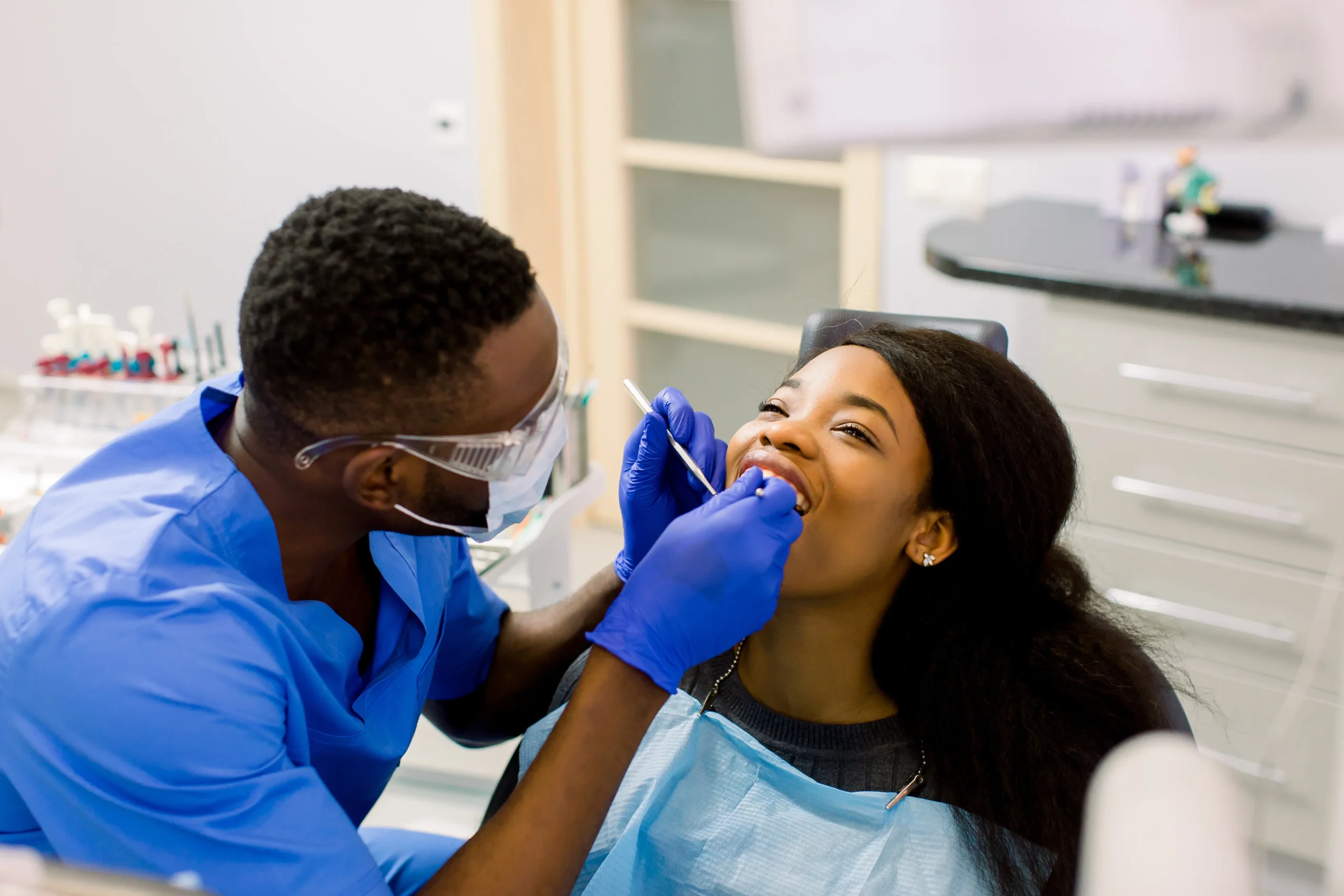

Your extraction begins with a consultation and 3D imaging so Dr. Williams can review the tooth’s position, root structure, and the condition of the surrounding bone before any procedure takes place. On the day of your extraction, sedation options are available ranging from nitrous oxide to IV sedation with CRNA support, depending on the complexity of the case and your comfort level. Dr. Williams takes care throughout the procedure to minimize trauma to the surrounding tissue, which is especially important when implant placement is part of your treatment plan.
In cases where implant placement is planned, Dr. Williams may recommend a socket preservation graft at the time of extraction. This bone grafting procedure fills the empty socket immediately after the tooth is removed, protecting the jawbone from the resorption that begins within weeks of tooth loss and ensuring a healthier, more stable site for your implant when the time comes. Following your procedure, you receive detailed written aftercare instructions, and our team is available to support you through recovery.
When decay has progressed deep into the tooth structure or a fracture extends below the gumline, there is often no restorative option that can reliably save the tooth long-term. Attempting to preserve a tooth in this condition can lead to recurring infection, continued bone loss, and ultimately a more complicated removal later. In these cases, extraction is the most honest and practical path forward, and moving toward replacement sooner protects the health of the surrounding teeth and bone.
A tooth infection that has moved beyond the root and into the surrounding bone cannot always be resolved with a root canal or antibiotics alone. When the infection is extensive enough to compromise the structural integrity of the tooth or pose a risk to neighboring teeth and tissue, extraction becomes necessary to stop the spread and allow proper healing. Dr. Williams reviews your imaging carefully before making this suggestion, and he will always explain clearly why saving the tooth is no longer a viable option.
Some patients arrive knowing that one or more failing teeth need to be removed before their implant journey can begin. Whether it is a tooth that has been slowly declining for years or one that failed after previous dental work, clearing the site is an important first step in building toward a stable, long-term result. Because Dr. Williams performs both the extraction and the implant placement, that transition happens within a single coordinated plan rather than across disconnected providers.
An extraction may be recommended when a tooth is too severely decayed or damaged to be saved, when infection has spread beyond what a root canal can address, or when a failing tooth needs to be removed before implant treatment can begin. Dr. Williams reviews all available options at your consultation and only recommends extraction when it is genuinely the best path forward for your long-term oral health.
The area is fully numbed before any work begins, so you should not feel pain during the procedure. Sedation options are also available if you experience dental anxiety or are undergoing a more involved extraction. Some soreness and swelling in the days following is normal and manageable with the aftercare instructions we provide, and our team is available to support you through your recovery.
Yes, and in some cases an implant can be placed the same day as the extraction when the site is healthy and there is sufficient bone present. In other situations, a healing period is needed first, particularly if bone grafting is recommended to preserve the socket. Dr. Williams maps out the most efficient path from extraction to your final restoration during your consultation so you have a clear picture of the full timeline before anything begins.
We work with CareCredit, Cherry, Alpheon, and Sunbit, and accept HSAs and FSAs, so there’s a payment option for every budget.
We accept referrals throughout the Atlanta area. Referring a patient is simple, call our office or use our referral form to get started.